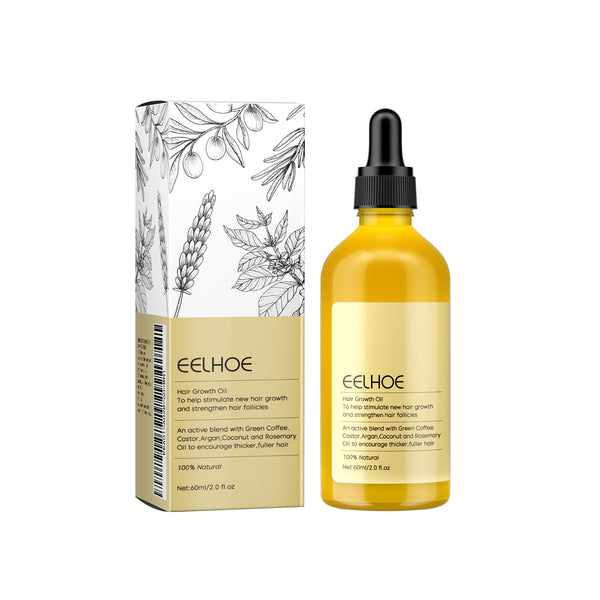

How Long Does Rosemary Oil Take to Grow Hair? A Realistic Timeline
 If you’re wondering how long rosemary oil takes to grow hair, the short answer is: don’t expect to see a difference overnight. The limited human research on rosemary oil suggests that any potential hair-growth benefits take months rather than weeks, and your results may vary depending on what’s causing your hair thinning in the first place.
If you want to try it, think of rosemary oil as a consistent, long-term addition to your routine rather than a quick fix. Here's what you can expect:
Rosemary Oil Hair Growth Timeline
- Weeks 1–2: At this point, your main goal is simply establishing a consistent routine. Apply your rosemary hair or scalp product according to its directions and resist the urge to use extra product in hopes of speeding things up. You likely won’t see new hair growth this early, and that’s completely normal.
- Weeks 3–4: Don’t judge the results yet. It’s still too soon to decide whether rosemary oil is working for you. Hair growth is a slow process, so changes can be difficult to spot from week to week. Instead of checking your hair every day, stick with your routine and pay attention to how your scalp and hair feel.
- Weeks 5–8: Start tracking. Around the one- to two-month mark, you can begin comparing your hair with your starting point. Take photos in the same spot with similar lighting and wear your hair in the same style each time. You can also keep a simple note of changes you notice, such as increased shedding, a change in how full your ponytail feels or whether your scalp looks different.
- Weeks 9–12: Keep your expectations realistic. Three months can feel like a long time when you’re waiting for your hair to change, but research suggests it may still be too early to see a meaningful difference from rosemary oil. In a small human study, people using rosemary oil did not have a significant increase in hair count after three months.
- Months 4–6: Look for longer-term changes. Six months is a more useful benchmark based on the available human evidence. In that same study, people using rosemary oil had a significant increase in hair count after six months. However, the study was relatively small and focused on a specific type of hair loss, so these results shouldn't be viewed as a guarantee that rosemary oil will regrow your hair.
How to Tell If It’s Working
Consistency is more useful than obsessively checking the mirror. Take a baseline photo before starting, then take another every four to six weeks using the same lighting, angle and hairstyle. You can also take a close-up of your part or areas where you've noticed thinning.
Most importantly, don't compare your progress with someone else's before-and-after photos. Hair growth varies from person to person, and rosemary oil hasn't been proven to work for every type of hair loss.
When to See a Professional
Rosemary oil shouldn't be your only plan if you're experiencing sudden, significant or persistent hair loss. A widening part, a noticeably thinner ponytail, a growing bald spot or a sudden patch of missing hair can have many different causes, and finding the cause is an important first step toward choosing the right treatment.
The American Academy of Dermatology recommends seeing a dermatologist for hair loss because they can determine what's behind it and recommend appropriate treatment.
And if your scalp becomes itchy, red, painful or irritated after using rosemary oil, stop using it rather than trying to push through the reaction.
Start a consistent routine if rosemary oil is something you'd like to try!
Share